
Can two people wear the same dagger and end up saying opposite things about themselves? They can, and that's the first thing to understand about dagger tattoo meaning: the blade is the verb, not the whole sentence. A dagger tattoo most often signals courage, protection, betrayal, sacrifice, or transformation, and the image around the blade decides which of those a stranger reads first. Choose the companion motif carefully and the design says what you mean. Choose it carelessly and a symbol of resilience starts to look like a threat.
Table of Contents
- What Does a Dagger Tattoo Mean?
- Where Does the Dagger Symbol Come From?
- Where Should a Dagger Tattoo Go on the Body?
- How Does Tattoo Style Change the Dagger?
-
Dagger Tattoo FAQ
- Does a dagger always mean violence or crime
- Is a dagger through a heart only about a breakup
- Is the meaning fixed once the design is chosen
- Is bigger always better
- Is a small design automatically subtle
- Is a dagger tattoo bad luck
- Where should a dagger go on a small frame
- Should the dagger point up or down
- Try It Before You Commit
What Does a Dagger Tattoo Mean?
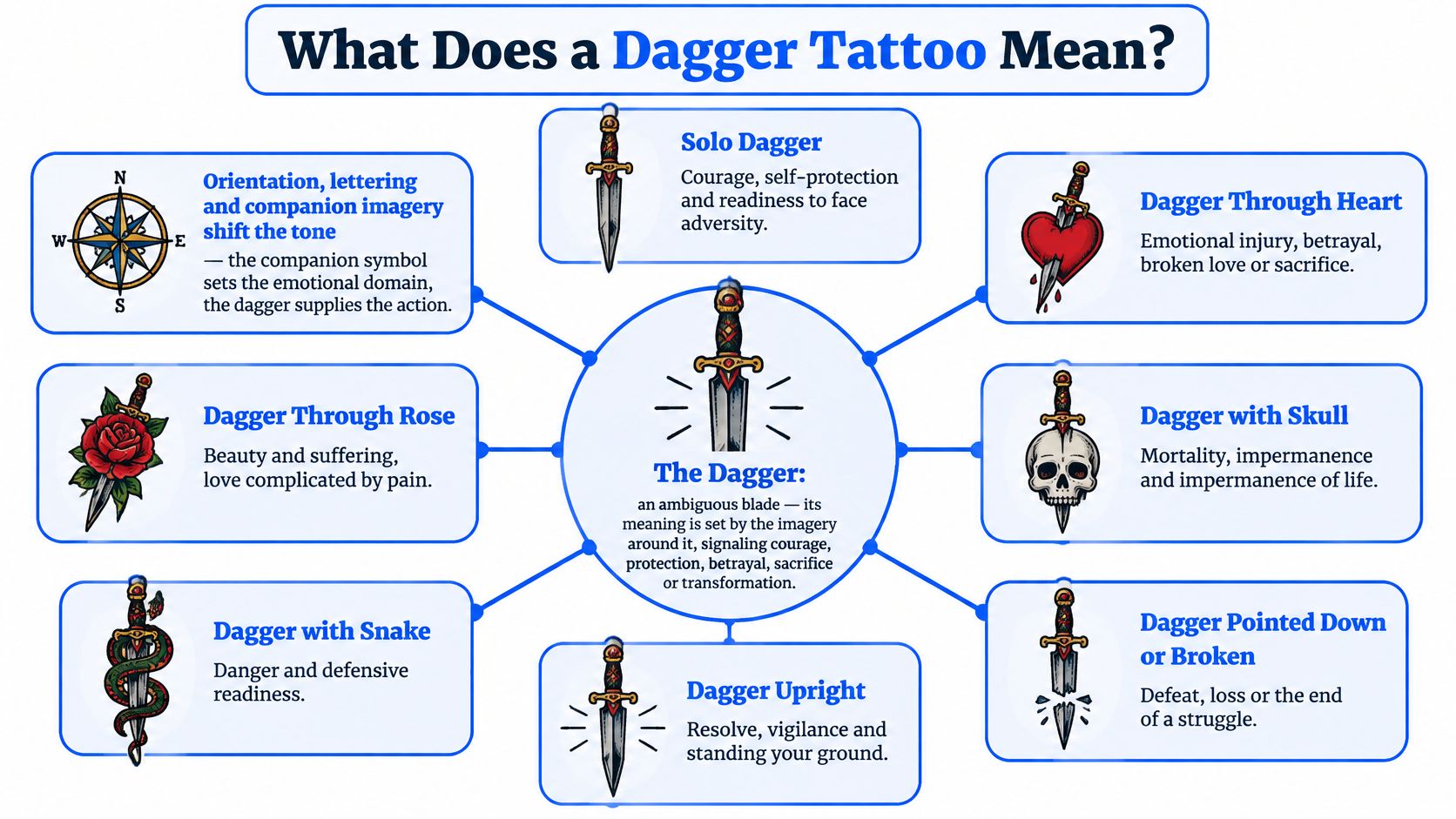
A dagger tattoo usually signals courage, protection, betrayal, sacrifice, or transformation, and the surrounding imagery decides which one lands. The blade alone is ambiguous. It's the tool you carry to defend yourself and the weapon someone hides to do harm, so a solo dagger can read as readiness or as treachery depending on how it's framed.
That ambiguity isn't a modern confusion. Dagger imagery sits deep in American traditional tattooing, where it recurs alongside hearts, roses, skulls, snakes, and banners. The Tattoo History Atlas points to a documented institutional milestone: the Mariners' Museum acquired Cap Coleman's Norfolk tattoo flash in 1936, and that collection includes dagger-through-heart, dagger-and-snake, dagger-and-rose, and standalone dagger compositions. Those pairings weren't decorative variety. They built a visual grammar in which the dagger's meaning shifts with whatever it pierces or sits beside.
How the companion motif sets the meaning
Read a dagger design in two parts. The companion symbol supplies the emotional domain, and the dagger supplies the action inside it. Swap the companion and you swap the story, even when the blade is drawn identically.
| Composition | Common reading | Tone pushed by | Widely documented? |
|---|---|---|---|
| Solo dagger | Courage, self-protection, readiness, confronting adversity | Blade direction, handle ornament, lettering | Yes, American traditional and maritime traditions |
| Dagger through heart | Emotional injury, betrayal, broken love, sacrifice | Blood, flames, hand grip | Yes, linked to 19th-century tattoo imagery and devotional martyrdom |
| Dagger through rose | Beauty and suffering, love complicated by pain | Color, realism versus traditional styling | Yes, Western tattoo tradition |
| Dagger with skull | Mortality, violence, revenge, impermanence | Blood, shading, placement | Yes, American traditional flash |
| Dagger with snake | Danger, defensive readiness, overcoming threat | Whether the snake wraps the blade or is pierced by it | Yes, documented flash compositions |
| Dagger upright | Resolve, vigilance, standing your ground | Symmetry, bold outline | Yes |
| Dagger pointed down or broken | Defeat, loss, end of a struggle | Break style, extra elements | Interpretive, not a fixed code |
Walk the rows and the logic holds. A solo dagger with a clean handle is the most direct read of self-protection or willingness to face something hard. A dagger through a heart moves into emotional injury, betrayal, or sacrifice, and the reading hardens when blood, flames, or a gripping hand appear. A dagger through a rose keeps beauty and suffering in the same frame. A skull pairing leans on mortality and revenge, and if that's the direction you want, our skull tattoo meaning guide covers the full set of readings. A snake pairing signals danger and defensive readiness, and the snake designs collection covers the serpent half of that composition.
Direction matters as much as the companion. An upright blade suggests resolve or vigilance, while a downward-pointing or broken one can imply defeat or the end of a struggle, a contrast noted in the historical record on daggers. Lettering, color, and a realistic blood detail all nudge the same design toward mourning, aggression, or quiet strength.
Where Does the Dagger Symbol Come From?
Trace the symbol through four layers and the apparent contradictions stop being contradictions.
Start with the object itself. Purpose-made daggers reach back to the Neolithic period, and the shift from flint to copper, bronze, and iron tracks both technology and the dagger's standing as a practical and prestigious possession, as an overview of dagger symbolism sets out. A short blade is the one weapon you carry close to the body. That's why it reads as personal defense and as intimate violence at the same time.
Then the political layer. Julius Caesar's assassination in 44 BCE, carried out by Roman senators with daggers, fixed the blade in Western memory as an emblem of conspiracy and betrayal. Shakespeare's 1599 play Julius Caesar renewed that association for English-speaking audiences four centuries later, which is why the phrase "et tu" still arrives with a knife in it.
The status layer complicates things further. Ornate daggers functioned as marks of power and royal favor in Mughal India and European courts, as the Wallace Collection's study of ceremonial daggers shows. An object can be a weapon, a badge of rank, and a ritual instrument in the same century.
Here's the worked example that makes the whole thing click. The blade a sailor carried for defense and the blade a conspirator slid between a leader's ribs are the same shape. Nothing about the steel changed. Only the framing did.
Tattoo culture inherited all of it. From the eighteenth century onward, American and European maritime traditions used the dagger as an emblem of courage, danger, readiness, and remembrance, and American traditional tattooing folded it into recurring flash sheets. That lineage is why a dagger still reads as a working-class, military-adjacent symbol rather than a costume prop, and why a pairing like a dagger with a swallow carries such weight in remembrance pieces, which our swallow tattoo meaning guide explains.
The rule that follows from the history: the dagger is a sharp object first and a metaphor second. Whoever frames it decides whether it means honor or treachery.
Where Should a Dagger Tattoo Go on the Body?
A dagger is a vertical, line-driven shape, so placement has to give the blade room to run. Cramp it and the proportions fight each other.
Forearm and inner forearm. Long enough for a full dagger with a rose or banner, easy to see, and easy to cover. This is the best spot for a first test of a design, because you'll catch it in the mirror all day.
Upper arm and shoulder. Space for a larger composition, such as a dagger through a skull or a dagger wrapped by a snake. The curve of the deltoid suits a diagonal angle better than a strict vertical.
Calf and shin. The natural vertical line of the leg flatters a single blade. A shin piece reads bold from a distance, which suits traditional styling.
Back and chest. Room for a full traditional piece with hearts, snakes, or banners. These are the placements where a companion motif has space to breathe instead of crowding the handle.
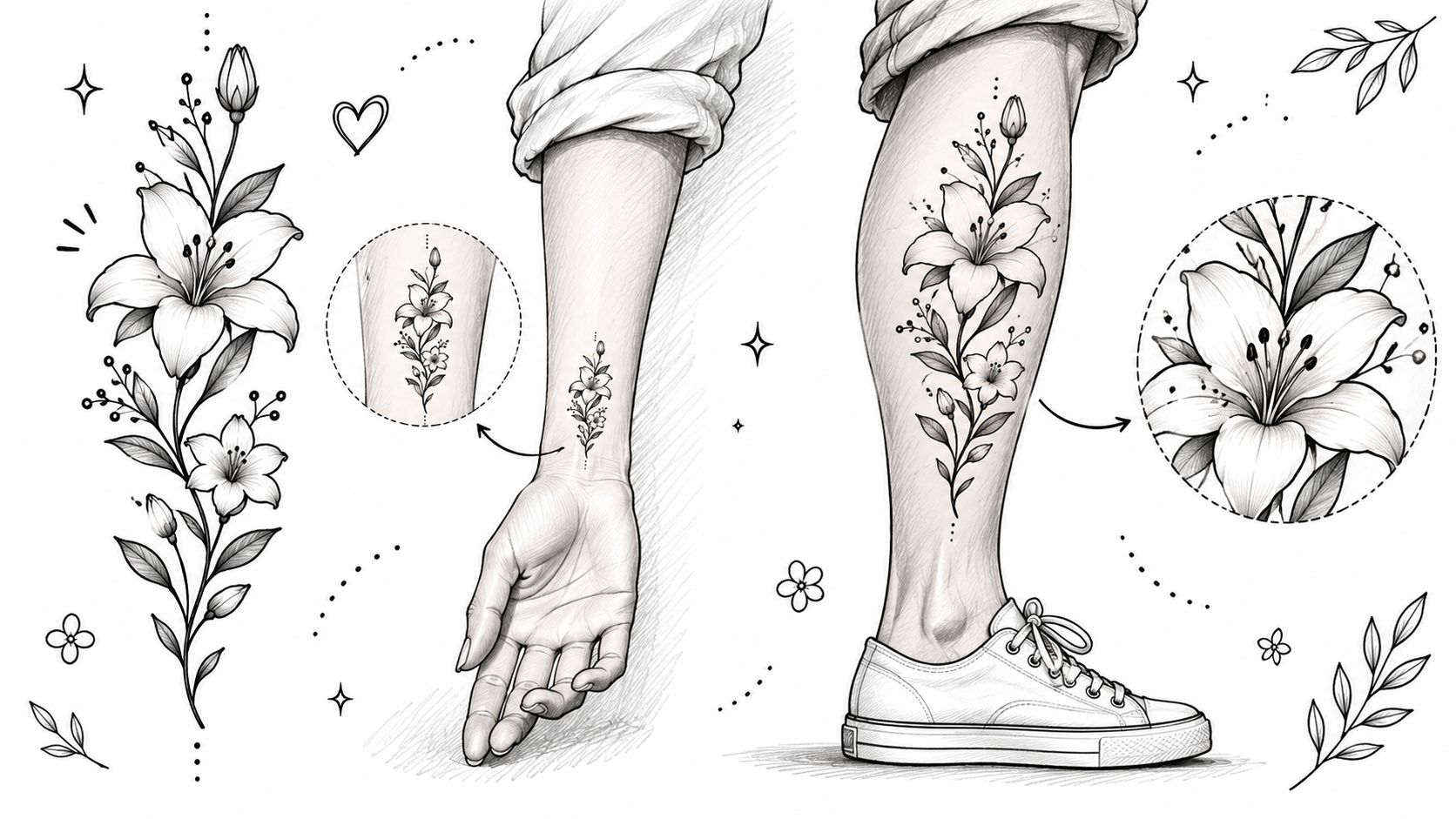
Wrist and ankle. Best for a small, simple dagger. Fine detail blurs at this scale, so keep the outline heavy and the internal shading minimal.
Hands and fingers. Bold, simple shapes only. Small, strong designs hold up on hands better than delicate linework, and the palm side wears fastest of all.
The sizing rule that saves a design
A dagger smaller than a couple of inches reads as a symbol: a mark, a glyph, a quick statement. Past about four inches it reads as a full composition, and a lone blade at that size looks unfinished, like a sentence missing its object. If you want a big dagger, plan the companion motif from the start.
Skin type, friction, and how often you wash the area all affect how long any design holds, which is worth thinking through before you commit to a spot. Our guide to tattoo placement walks through the trade-offs body part by body part.
How Does Tattoo Style Change the Dagger?
The same motif can look protective, mournful, or openly aggressive depending on how it's drawn. Style is not decoration here. It's part of the message.
American traditional
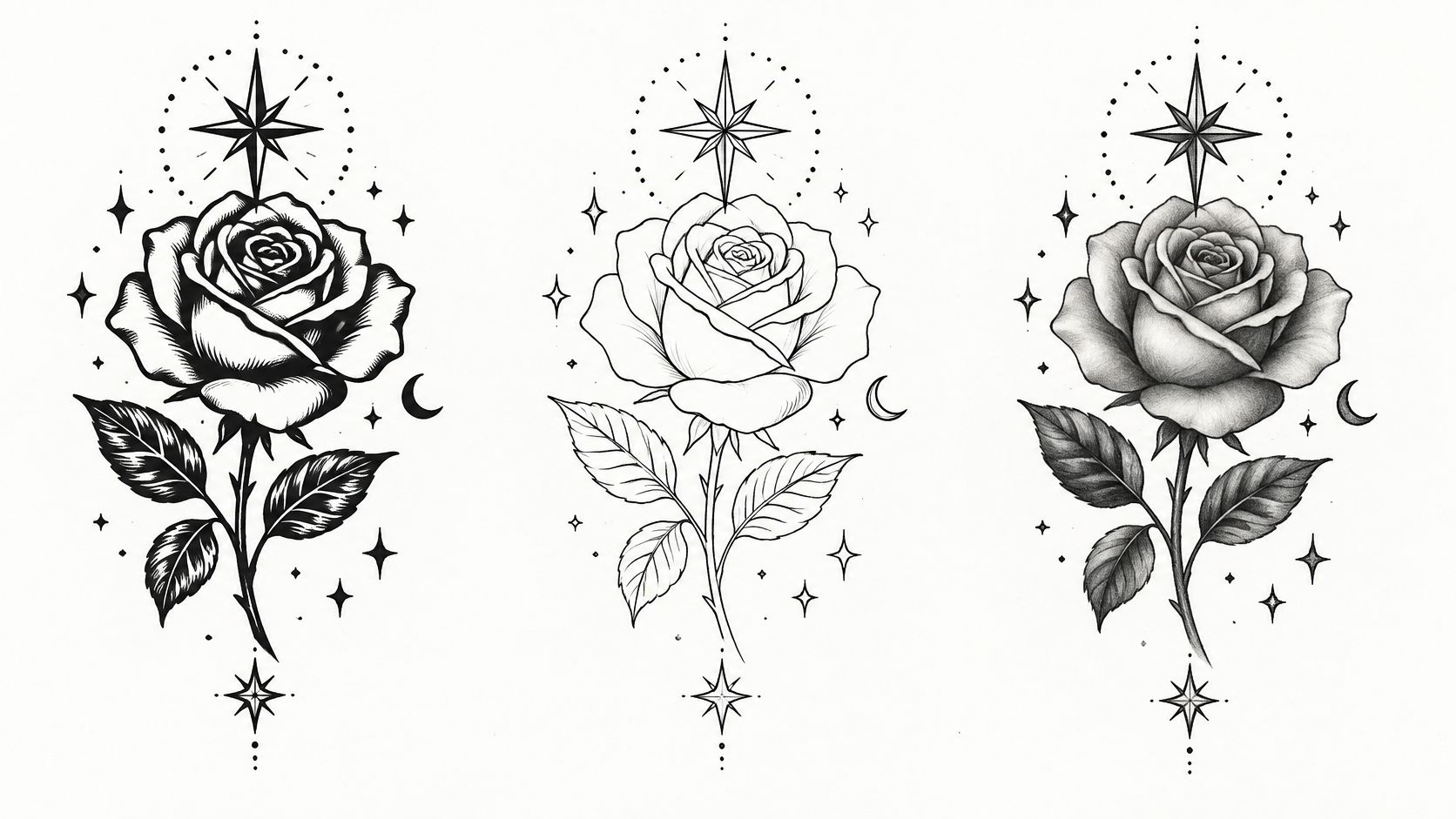
Bold black outlines, a tight color palette, heavy shading. This is the version closest to the dagger's maritime roots and the most readable across a room. A dagger and rose in this style looks classic and legible at almost any size, which is exactly why the flash sheets from the 1930s leaned on it.
Black and grey and blackwork
Softer gradients in black and grey, or solid fills in blackwork. Both push the dagger toward the severe end of the range, elegant in black and grey and blunt in heavy blackwork. Neither softens the image, they just change its temperature.
Fine line
Delicate, minimal linework that feels contemporary and quiet. It suits a clean single blade beautifully. It also loses impact quickly at small sizes and on high-friction spots, so a fine-line dagger on a finger is a short-lived idea.
Realism
Shading, texture, and blood detail that make the dagger feel visceral. It's the most emotionally direct style available, so use the blood deliberately. A realistic dagger through a heart is not a subtle piece, and it isn't meant to be.
Color versus black changes the emphasis too. Color pulls the eye to the companion motif, a red rose or a red wound, while black keeps the whole image stark and graphic.
Match style to message before you match it to fashion. Traditional for a bold, historic feel, fine line for a restrained one, realism for a heavier one.
Dagger Tattoo FAQ
Does a dagger always mean violence or crime
No. The image is context-dependent and appears across military, maritime, religious, and fashion contexts. A solo blade usually reads as courage or self-protection, not as a threat.
Is a dagger through a heart only about a breakup
It covers more ground than that. The motif also carries sacrifice, grief, devotion, and martyrdom imagery, so plenty of viewers read resilience in it rather than heartbreak.
Is the meaning fixed once the design is chosen
Not quite. Viewers interpret a design through their own culture and experience, which is exactly why the companion motif does more work than the blade. You can steer the reading, but you can't fully control it.
Is bigger always better
No. A detailed dagger at wrist size turns into a dark smudge, because the fine interior work closes up as the lines sit close together. Scale the detail to the space.
Is a small design automatically subtle
Not if it's bold black. A two-inch traditional dagger reads strongly from across a table. A fine-line piece at the same size can be nearly invisible from a distance, which is a different kind of subtle.
Is a dagger tattoo bad luck
The image works as a visual metaphor, not a curse. Meaning comes from the design, the placement, and the person wearing it, and most viewers read intent rather than superstition.
Where should a dagger go on a small frame
A forearm, upper arm, wrist, or calf with a simple single blade. All four give a vertical shape enough length without swallowing the body part.
Should the dagger point up or down
An upright blade suggests resolve and vigilance. A downward or broken blade can suggest defeat or an ended struggle. Direction is a message choice, so decide what you want the design to say before the artist starts drawing.
Try It Before You Commit
There's a real gap between liking a dagger on paper and liking it on your forearm. Scale shifts, the shape sits differently on a curved limb than on a flat sketch, and a design that looked restrained in a drawing can feel loud once it's six inches from your own wrist. A semi-permanent piece closes that gap for the price of a coffee and a week of looking.
Two compositions here match the motifs above. The Danger Dagger temporary tattoo gives you the solo-blade read: courage, readiness, self-protection. The Skull Roses Dagger temporary tattoo combines mortality with beauty in one image, which is the pairing that usually needs a trial run before anyone commits.
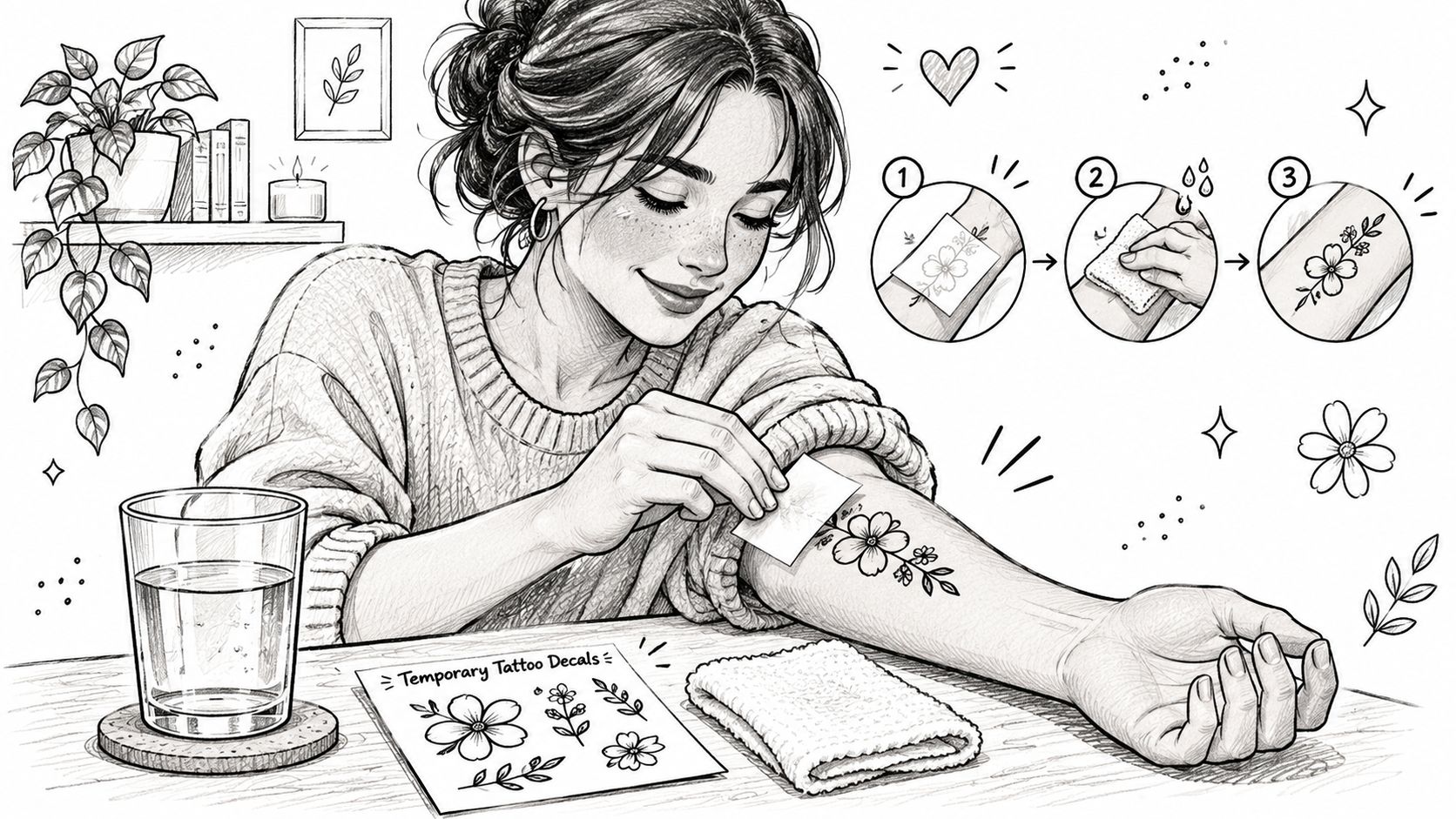
Just Tattoos designs look like real tattoos, use plant-based ink, and apply at home with no needles. The ink develops over about 24 hours from faint to a deep blue-black, and most designs last 7–10 days, depending on skin and placement. Our tattoos are skin-safe, and if your skin is sensitive, do a patch test on a small area first. The catalog runs past 300 artist-made designs, and you can browse all designs by style and placement when you want to compare a dagger against a snake, a rose, or a full sleeve.
Pick the message, pick the matching design, wear it for the week, then book the artist only if it reads right on your actual skin.
That order matters. Most regret comes from committing to a placement before seeing it in context, not from choosing the wrong symbol. If you want a more structured way to run the test, our guide to trying a tattoo before you get it lays out the steps.
Just Tattoos makes semi-permanent tattoos with plant-based ink that you apply at home, no needles, so you can wear a dagger for a week before you decide it belongs on your skin for good. Start with the solo blade or the skull-and-rose pairing and see which one reads the way you intended on your own forearm, wrist, or calf. Browse the full catalog at Just Tattoos and pick the dagger that says what you mean.
Part of our Tattoo Symbols and Meanings guide, which groups every symbol by theme, from animals and flowers to sun, moon and stars.